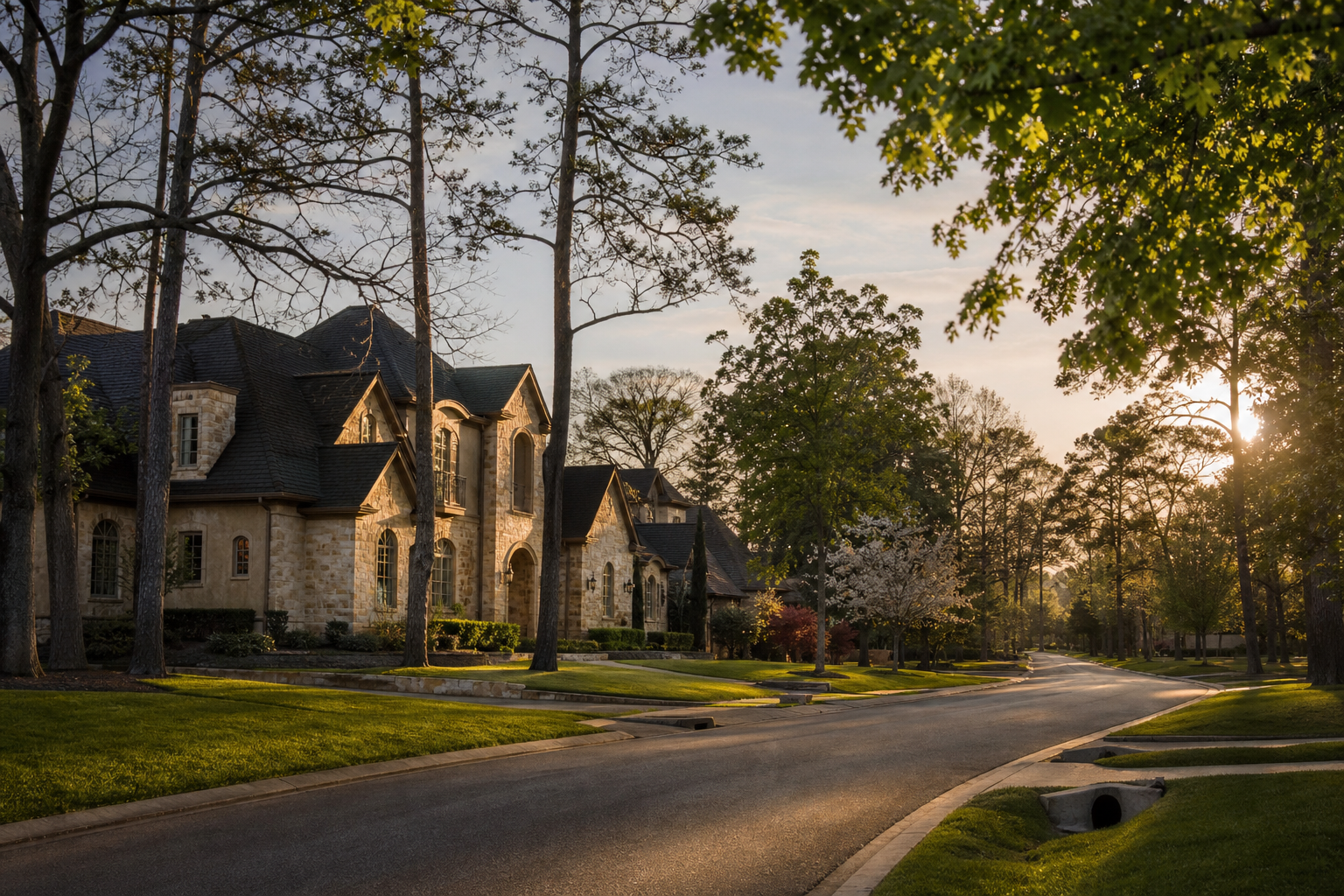
Selling a luxury home in East Texas requires property-specific positioning, precision pricing from limited comparables, a complete documentation package, and targeted marketing to qualified buyers, not the same playbook used for a standard listing.
What does it take to sell a high-end home in East Texas?
Selling a luxury home in East Texas with ease comes down to three things: pricing it defensibly from thin comparable data, presenting it to the right buyers through the right channels, and having every document organized before the first showing. Skip any one of those, and you're either leaving money on the table or watching deals fall apart in due diligence.
Key Takeaways
- Luxury home pricing in East Texas requires a two-layer process: start with the closest comparable sales, then adjust separately for acreage, water frontage, construction quality, and infrastructure that standard comps undervalue.
- A Tyler executive home, a Longview custom build, a lake property, and an acreage estate each need different positioning and a different target buyer pool, one marketing approach does not cover all four.
- Assembling surveys, permits, warranties, HVAC records, and pool or dock documentation before launch reduces renegotiation and keeps qualified buyers moving forward.
- Texas requires a Seller's Disclosure Notice for previously occupied single-family residences, and homes built before 1978 trigger a separate federal lead-based-paint process with its own TREC addendum.
- Privacy-conscious showing protocols, appointment-only access, proof of funds before scheduling, and a showing log, are standard risk management for high-value properties, not optional extras.
How do you price a luxury home in East Texas when comparables are scarce?
This is the single hardest part of selling a high-end home in this market, and it's where I see sellers make the most costly mistakes. There simply aren't enough recent sales of $1M+ homes in East Texas to run a clean comparable-sales analysis the way you would on a $350,000 house. So you work in two layers.
Layer one is establishing a defensible value range from the most comparable recent local sales and active competing listings. That means pulling everything in the relevant price tier, even if the properties aren't perfect matches, and understanding what buyers actually paid versus what sellers asked.
Layer two is where precision matters most. You adjust for the features that a standard comp analysis consistently undervalues: acreage configuration, water frontage, views, construction quality, outbuildings, guest accommodations, generator capacity, smart-home systems, security infrastructure, and ongoing maintenance burden. A property with a private dock on a lake near Longview is not the same asset as a comparable square footage in a Tyler subdivision, and pricing it like one is how you lose six figures.
According to NAR's research division, luxury properties nationally spend significantly longer on market than mid-range homes, which means an overpriced luxury listing in a thin market can sit long enough to become stigmatized. In East Texas, where the buyer pool for high-end homes is smaller to begin with, that risk is amplified. Price it right from day one, that's not a cliché, it's math.
Your specific number depends on your home's condition, location, acreage, and the current competitive set. That's exactly the kind of analysis I build before we ever talk about a list price.
Why property type changes everything
A Tyler-area executive home, a Longview custom build, a lake property, and an acreage estate should not share the same comparable set or the same marketing angle. Each one leads with a different lifestyle attribute and attracts a different buyer. A waterfront home on Lake Fork or Caddo Lake leads with access and recreation. A private estate with equestrian infrastructure leads with land use and operational capacity. An architectural showpiece in a Tyler neighborhood leads with design and convenience. Getting this wrong at the positioning stage means your marketing reaches the wrong people, and the right buyers never see it.
Selling East Texas with Ease means reaching the right buyers first
Getting to a smooth close on a high-end home means reaching qualified buyers before they find the listing on a portal, not after. That requires a deliberate, multi-channel campaign built around the property's strongest attributes.
Here's what a well-constructed luxury marketing plan typically includes:
- Professional architectural photography and video, not standard real estate photos. Wide-angle interiors, natural light, detail shots of custom finishes, and aerial imagery where the land, water, or setting is a selling point.
- Seasonal presentation planning, photography should capture the property at its best, and any feature that looks different across seasons (lake levels, pasture condition, landscaping, outdoor entertaining areas) should be documented and explained to buyers. A buyer who sees spring photography in the fall needs context, not a surprise.
- Broker-to-broker outreach, directly contacting agents whose clients are actively seeking acreage, waterfront, golf, equestrian, or executive properties. This is how serious buyers find serious listings before they hit public search.
- Targeted digital advertising, reaching buyers by income, geography, and lifestyle interest, not just anyone browsing homes in a ZIP code.
- A complete feature sheet and floor plan, high-end buyers and their agents want specifics. Square footage, room dimensions, acreage breakdown, infrastructure details, and a list of major system ages and upgrades.
The Luxury Portfolio International network and similar luxury marketing platforms extend reach to buyers relocating from larger metros, a meaningful segment of the East Texas luxury buyer pool. According to NAR's luxury market research, out-of-area buyers represent a substantial share of high-end purchases in secondary markets, which is exactly what East Texas is to a buyer moving from Dallas, Houston, or out of state.
I also think carefully about what not to publish. High-value sellers often have legitimate privacy concerns, exact address, interior security features, personal property visible in photos. Controlling what goes public versus what gets shared only with verified, qualified buyers is part of the plan, not an afterthought.
Privacy-conscious showing protocols
Appointment-only showings, proof of funds or lender pre-qualification before access, a showing log, and limited photography of valuables are standard risk-management practices for high-end listings. They also signal to serious buyers that the seller is organized and intentional, which sets the tone for a professional transaction. These aren't universal legal requirements; they're smart operating procedure.
How do you prepare a luxury East Texas property for sale?
The documentation and disclosure work for a high-value property is more involved than a standard listing, and the sellers who handle it before launch have smoother transactions. Here's what I walk my clients through before we go live.
Build your documentation room first
Buyers of expensive homes conduct more extensive due diligence. Organizing everything in advance, surveys, easements, permits, invoices, warranties, architectural plans, roof and HVAC records, pool or dock records, septic or well information, and documentation for custom features, reduces avoidable delays and renegotiation once you're under contract.
For a rural or acreage property, this is especially important. A luxury East Texas property with a well, septic system, pond, private road, fencing, barn, workshop, generator, or dock should have supporting maintenance and ownership records ready. These features add value, but they also create specialized inspection and financing questions. A buyer who can't get answers during due diligence either walks or renegotiates, neither is the outcome you want.
The table below shows the documentation categories I recommend organizing before any high-value listing goes to market.
| Documentation Category | Examples | Why It Matters |
|---|---|---|
| Legal and boundary | Survey, easements, deed, title policy | Resolves boundary and access questions before they stall a deal |
| Permits and improvements | Building permits, architectural plans, addition records | Confirms work was done to code; supports value claims |
| Major systems | HVAC, roof, generator, electrical, plumbing records | Buyers and inspectors will ask; having records speeds due diligence |
| Rural infrastructure | Well, septic, pond, private road, fencing, barn, dock | Specialized features require specialized documentation for lenders and inspectors |
| Warranties and service contracts | Appliance warranties, smart-home systems, pool equipment | Transferable warranties add value and reduce buyer concern |
| Disclosures | Texas Seller's Disclosure Notice, lead-paint addendum if applicable | Required by Texas law; completing early prevents last-minute contract delays |
Handle disclosures before marketing begins
Texas requires sellers of previously occupied single-family residences to provide the statutory Seller's Disclosure Notice for contracts entered into on or after September 1, 2023. The form covers material facts and the property's physical condition. Completing it before you list, rather than scrambling after an offer comes in, keeps the transaction moving and signals to buyers that you're a serious, organized seller.
If the dwelling was built before 1978, a separate federal lead-based-paint process applies. Texas REALTORS® explains that the federal lead-based-paint disclosure must be used when a TREC or Texas REALTORS® contract form is used for a qualifying property, including delivery of the required information and the federally approved pamphlet before the buyer becomes obligated. The applicable TREC addendum should be part of your pre-listing preparation if your home predates 1978.
It's also worth noting that even sellers who fall within an exemption from the statutory disclosure notice still have an obligation to disclose known defects, as Texas REALTORS® makes clear. High-value transactions attract more scrutiny, not less, getting disclosures right from the start protects you.
Once you're under contract, your title company handles the closing and settlement process. Choosing a title company experienced with complex, high-value transactions, ones that can manage rural infrastructure, acreage, or waterfront title questions, is worth discussing before you list.
I've found that sellers who want to move through this process in East Texas with ease are the ones who treat preparation as a strategy, not a checklist. For a broader look at how preparation connects to your final outcome, my post on where to focus your energy when selling your East Texas home covers the decisions that move the needle most. And if you're specifically selling in Longview, I've written directly about what it takes to sell a luxury home in Longview.
Frequently Asked Questions
How do I price a luxury home in Tyler or Longview when there are few comparable sales?
You use a two-layer process: first establish a defensible range from the closest available recent sales and active competing listings, then adjust separately for features that standard comps undervalue, acreage, water frontage, construction quality, outbuildings, and infrastructure. Because the luxury buyer pool in East Texas is smaller than in major metros, overpricing creates a stigma risk that's harder to recover from; getting the number right at launch matters more, not less. A local agent with direct access to MLS data and recent luxury transaction history is the most reliable resource for this analysis.
How long does it typically take to sell a luxury home in East Texas?
High-end homes in any market take longer to sell than mid-range properties because the buyer pool is smaller and due diligence is more involved. The timeline depends heavily on price point, property type, condition, and how well the listing is positioned and marketed. A well-prepared, accurately priced luxury property with strong marketing will move faster than one that launches overpriced or underprepared, the difference can be months. I'll give you a realistic timeline estimate as part of our pre-listing conversation.
Should I renovate before listing a high-end home in East Texas?
Not always, and the answer depends on which renovations, what they cost, and how the market is currently pricing that feature. Some updates (deferred maintenance, dated kitchens in a price tier where buyers expect current finishes) are worth addressing. Others (full remodels, highly personalized upgrades) often cost more than they return in a luxury sale. I walk my clients through a pre-listing assessment so we're spending money where it actually moves the needle, not just improving the house for the next owner.
How do I market a luxury home with acreage, a lake, or a private dock?
Lead with the lifestyle attribute that makes the property unique: waterfront access, privacy, equestrian infrastructure, or land use capacity. That means professional aerial photography, video, a detailed feature sheet covering acreage breakdown and rural infrastructure, and targeted outreach to agents whose buyers are specifically seeking those features. A generic MLS listing with standard photos is not a luxury marketing plan, it's a missed opportunity in a thin buyer pool.
How can I protect my privacy while still giving qualified buyers enough access?
Appointment-only showings, proof of funds or pre-qualification before scheduling, a showing log, and controlled release of the exact address are all standard practice for high-value listings. These protocols don't deter serious buyers, they filter out unqualified ones and signal that the seller is organized. I set these protocols up before the first showing, not after a concern comes up.
The bottom line on selling luxury real estate in East Texas
Selling a high-end home in East Texas with ease is not about doing more of what works on a standard listing, it's about doing different things with more precision. Pricing from thin data, marketing to a targeted buyer pool, building a complete documentation package, and protecting your privacy while giving qualified buyers full access: each piece requires specific expertise and local knowledge.
I have a proven plan for high-value properties, and I'd like to walk you through it. Schedule a consultation and let's talk about what your property is worth and how we get it sold.
Equal Housing Opportunity. Julie Woods, Broker (Active), regulated by the Texas Real Estate Commission (TREC). This article is general information only and does not constitute legal, tax, or financial advice. Confirm your specific numbers and transaction details with your title company, tax advisor, or lender. Broker fees and commissions are fully negotiable and not set by law.